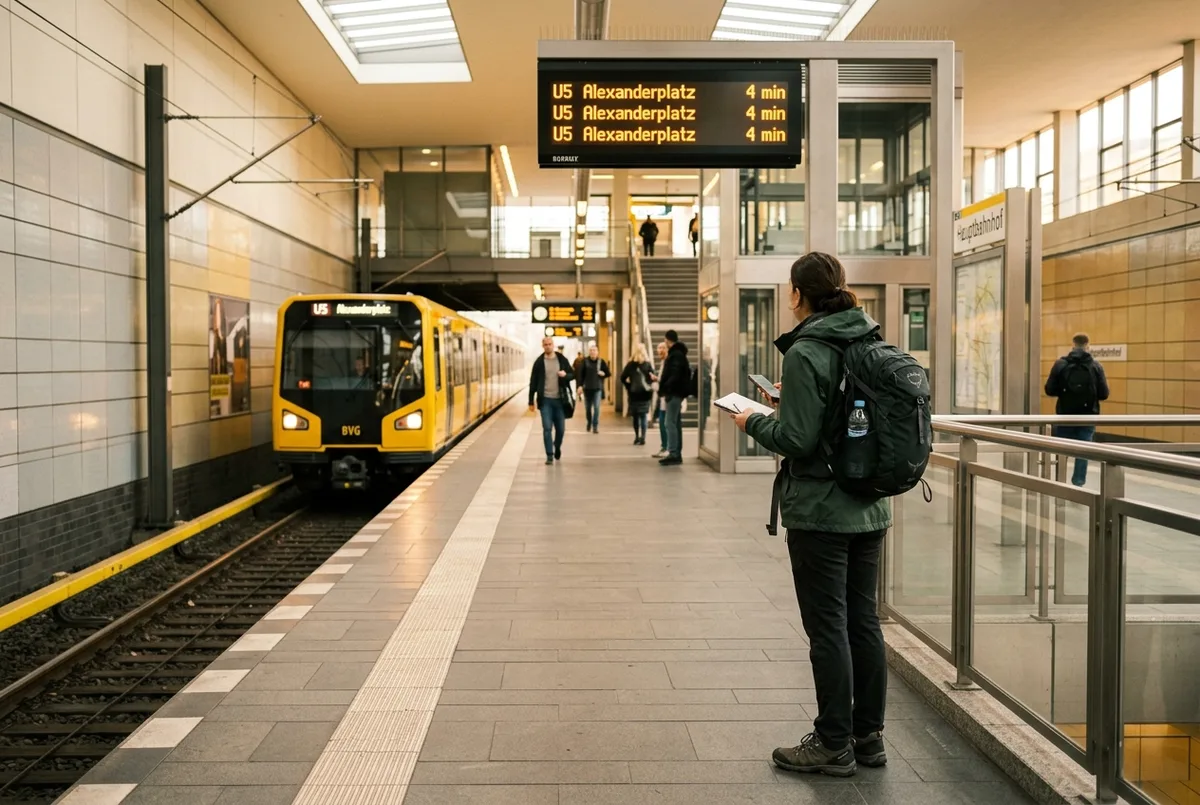
Getting around Berlin public transport is genuinely one of the easier systems in Europe to learn, once you understand the basic layout: a dense U-Bahn and S-Bahn network covering most of the city, with buses and trams filling in wherever the rail lines don’t reach.
Here’s how I’d actually plan your days around it. The system rewards a little upfront reading more than most, mainly because the zone and ticket structure trips up first-timers who skip that step and end up overpaying without realizing it.
How Does Berlin’s Public Transport Network Work?
Berlin runs on an integrated system combining the U-Bahn subway, the S-Bahn suburban rail, buses, trams and ferries, all covered by the same ticket within whichever fare zone you buy for. Zone A covers the city center, Zone B extends to the city limits, and Zone C reaches the surrounding region including the airport.
I’d buy an AB zone ticket for almost any city center stay, since it covers everywhere a first-time visitor is likely to go without paying extra for zone C you probably won’t use.
What Ticket Do You Actually Need?
A single ticket, a day ticket, or a multi-day pass are the main options, and a day ticket almost always wins the moment you plan three or more rides in a single day. Tickets must be validated at a yellow or red stamping machine before boarding, since Berlin runs on an honor system with spot checks rather than turnstiles.
My honest advice is to buy a day ticket on arrival rather than individual single tickets, since the math breaks in your favor after just a few rides and it saves you from refiguring fares all day.
Is the U-Bahn or S-Bahn Better for Tourists?
The U-Bahn runs more frequently and covers the central city more densely, while the S-Bahn moves faster over longer distances and reaches further out toward the suburbs and the airport. Most sightseeing trips lean on the U-Bahn simply because it stops closer to the major landmarks.
I’d default to the U-Bahn for anything inside the city center and switch to the S-Bahn only for longer hops, like an airport run or a day trip departure point.
How Do Buses and Trams Fill the Gaps?
Buses and trams cover routes the rail network misses, particularly in neighborhoods east of the center where trams still run as a legacy of the city’s divided past. They’re slower than the trains but useful for short hops where changing trains would take longer than just riding it out.
I’d use a bus or tram mainly for short, specific connections rather than as a main way to cross the city, since traffic can make them less predictable than the rail network.
Are Taxis and Rideshares Worth It in Berlin?
Taxis and rideshare apps are reliable and reasonably priced by major European capital standards, which makes them a sensible choice late at night or on arrival and departure days when you’re hauling luggage.

Honestly, I’d skip the public transport puzzle entirely on travel days with bags in tow. The money saved riding the train with luggage rarely feels worth the hassle of navigating stairs and transfers.
Is Walking a Realistic Option Between Sights?
Walking works well within a single neighborhood, where Berlin’s flat terrain and wide sidewalks make foot travel genuinely pleasant. Across neighborhoods, the distances add up fast enough that walking stops being the efficient choice.
I’d plan walking routes within one district at a time and switch to transit the moment a sight sits more than about fifteen minutes away on foot.
How Does Public Transport Compare to a Hop-On Hop-Off Bus?
Public transport asks you to plan routes and transfers yourself, while a hop-on-hop-off bus loops past the major landmarks on a fixed route you simply board and ride, with English commentary built in on most tickets.
My take is that the transit network wins on pure coverage and cost per ride, but how the hop-on-hop-off bus routes actually run wins on simplicity for a first full day, specifically because it removes the planning step entirely.
Do You Need to Validate Your Ticket?
Yes. Berlin’s transit system has no turnstiles, which means you’re responsible for stamping your own ticket at a platform machine before boarding. Inspectors do check periodically, and an unvalidated ticket counts as no ticket at all if one approaches you.
I’d validate the moment you buy, out of habit, rather than relying on remembering to do it once you’re already on a crowded platform.
Is Berlin’s Transport System Safe Late at Night?
Yes, trains and buses run on a reduced night schedule across most lines, and the system as a whole feels safe by any reasonable big-city standard. Ordinary awareness, like sitting near other passengers on quieter night trains, covers the realistic risk.
I’d use night transit without much hesitation, though I’d still default to a taxi after a very late night out simply for the shorter wait.
Which Option Works Best for a Short Trip?
For a trip under three days, I’d lean on a day ticket for public transport plus one hop-on-hop-off day to cover the spread out landmarks efficiently, rather than trying to master the full zone and transfer system for such a short stay.
That combination tends to cost less in total time than either option used alone, since each one covers the other’s weak spot.
Does Berlin’s Airport Connect Well to the City Center?
Yes, a direct airport express train links Berlin Brandenburg Airport to the city center, with taxis and shuttle options available if you’d rather skip the transfer between train lines while weighed down with luggage.
I’d take the express train on arrival if your bags are manageable, since it drops you close to where most sightseeing actually happens. If you’re carrying more than you can comfortably handle through a station, a taxi is worth the extra cost on that one trip specifically, even if you plan to use public transport for the rest of your stay.
Does Your Neighborhood Choice Affect Your Transport Plan?
Yes, meaningfully. A hotel near a major U-Bahn interchange cuts your daily transit time noticeably compared to one on a single bus line. My guide to picking the right neighborhood to stay in covers which areas give you the easiest transit access.
I’d weigh transit access heavily when picking where to stay, since it affects every single day of a trip rather than just one.
Should Families Use Public Transport or a Bus Tour?
Families generally do better with a hop-on-hop-off bus for sightseeing days, since it avoids the stairs, transfers and standing room that make public transport harder with young kids and strollers in tow.
My guide to whether Berlin works for a family trip goes into which ticket formats suit children best in more detail.
Is Berlin Worth the Transport Hassle?
Not really, once you understand the system it’s one of the easier ones in Europe to use. My honest look at whether Berlin is worth visiting covers the bigger picture questions beyond just transport.
I’d say transport logistics are the smallest reason to hesitate about a Berlin trip, well behind cost and time questions that matter more.
My Honest Recommendation
Buy a day ticket for public transport on arrival, lean on the U-Bahn for most of your sightseeing, and add a hop-on-hop-off ticket for at least one day to cover the spread out landmarks without planning every transfer yourself. Save taxis for late nights and luggage days.
For the official schedules and current fares, Berlin’s official transit operator is the most reliable source, and comparing every Berlin hop-on-hop-off ticket side by side on the homepage shows the easiest bus-based alternative.
Does the Weather Change How You Should Get Around?
A bit. Rain and winter cold make an open top bus ride less appealing, while a covered U-Bahn or S-Bahn carriage handles bad weather without any downside. On a clear day, the opposite is true, and the open deck is genuinely worth choosing over the train.
I’d check the forecast each morning and pick whichever option suits that day’s weather rather than committing to one mode of transport for your whole trip.
Frequently Asked Questions
What is the best way to get around Berlin as a tourist?
A day ticket on the U-Bahn and S-Bahn for most trips, plus a hop-on-hop-off bus day for the spread out landmarks, covers nearly every situation.
Do I need to validate my ticket before boarding in Berlin?
Yes. Stamp it at a platform machine before you board, since the system has no turnstiles and relies on spot checks instead.
Is the U-Bahn or S-Bahn better for sightseeing?
The U-Bahn covers the center more densely, while the S-Bahn is faster for longer trips like an airport run.
Are taxis expensive in Berlin?
No, taxis and rideshares are reasonably priced by major European capital standards, which makes them a sensible choice late at night or with luggage.