The best berlin germany tourist places cluster into three groups: the historic center around the Brandenburg Gate and Reichstag, Museum Island’s cluster of world-class collections, and the Cold War sites like Checkpoint Charlie and the East Side Gallery. I’d plan a first visit around those three groups rather than trying to hit a long, scattered list in no particular order.
Since how much of this list each Berlin hop-on-hop-off route actually covers is worth knowing before you plan your days, how each Berlin hop-on-hop-off route covers this list of sights is a useful comparison to check before you commit to a specific ticket.
What Are the Top Tourist Places in Berlin?
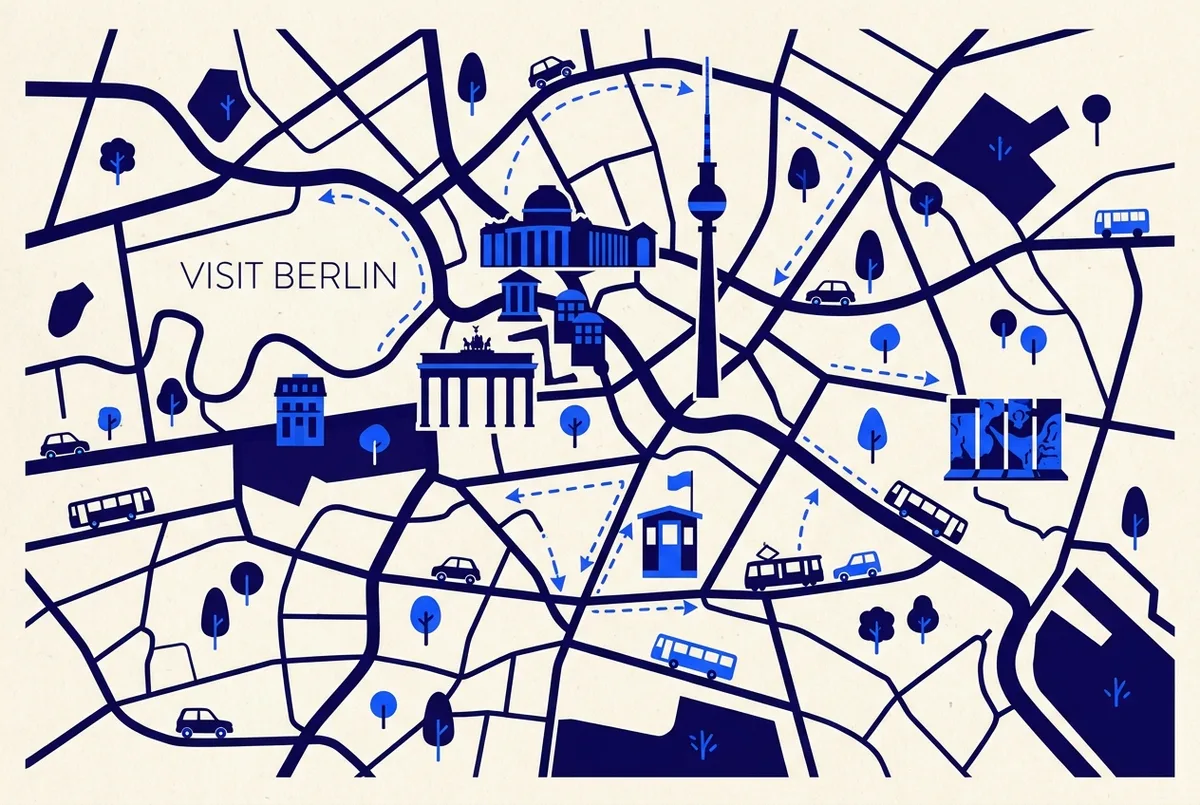
The Brandenburg Gate, Museum Island, the TV Tower at Alexanderplatz, Checkpoint Charlie, and the East Side Gallery form the core list most first-time visitors build a trip around. Each sits in a different part of the city, which is exactly why getting between them efficiently matters so much.
I’d treat these five as the non-negotiable core of a first Berlin visit. Everything else on a longer list, from specific museums to neighborhood walks, is worth adding only once these are covered.
Why Is the Brandenburg Gate Berlin’s Most Iconic Sight?
The Brandenburg Gate has stood at the heart of the city since the late eighteenth century and has witnessed everything from Napoleon’s occupation to the fall of the Berlin Wall, which makes it as much a symbol of German history as a photo stop.
I’d visit either early morning or around sunset, when the plaza is at its quietest and the light hits the gate’s columns best. Midday in peak season brings the thickest crowds of any single spot on this list.
What Should You See on Museum Island?
Museum Island holds five major museums within walking distance of each other, including the Pergamon Museum’s ancient architecture and the Neues Museum’s Egyptian collection, all set on an island in the Spree river just north of the historic center.
My honest advice is to pick one or two museums rather than trying to see all five in a single visit. Each one rewards real time, and rushing through multiple collections in an afternoon tends to leave you remembering none of them clearly.
Is the TV Tower Worth Visiting?
Yes, for the view alone. The TV Tower at Alexanderplatz is Germany’s tallest structure, and the observation deck gives you a genuinely useful orientation of the city’s layout that is hard to get any other way, especially early in a trip.
I’d go up on day one if the TV Tower is on your list, specifically because seeing the city’s layout from above helps the rest of your sightseeing make more sense. Booking a time slot in advance avoids the longest queues.
What Makes Checkpoint Charlie Worth Seeing?
Checkpoint Charlie marks the former border crossing between East and West Berlin, and while the original structure is gone, the reconstructed guard post and surrounding exhibits still convey what the city’s Cold War division actually meant for the people living through it.
I’d pair this stop with a short walk to nearby Gendarmenmarkt, Berlin’s most elegant square, since the two sit close together and the contrast between them says a lot about the city’s layered history in a single short walk.
How Long Should You Spend at the East Side Gallery?
The East Side Gallery is the longest surviving stretch of the Berlin Wall, now covered in murals painted by artists from around the world after the Wall came down. Most visitors spend thirty to forty-five minutes walking its full length at a relaxed pace.
I’d walk the whole stretch rather than just the most photographed section near the middle. The murals toward either end get noticeably less foot traffic, which makes for a calmer, more personal experience of the same gallery.
What’s the Best Way to See All These Sights in One Trip?
A hop-on-hop-off bus covers the distance between these spread-out landmarks far faster than walking or piecing together public transport routes, which matters a lot given how far apart Museum Island, the TV Tower, and the East Side Gallery actually sit from each other.
A hop-on-hop-off route typically loops past most of this list in a single pass, stopping close enough to each landmark that you rarely walk more than a few minutes from the nearest stop. I’d build day one of any Berlin trip around a ticket like this specifically because it removes the guesswork of getting between sights.
Should You Visit Berlin’s Historic Sites with a Guide?
A guide adds real context to places like Checkpoint Charlie and the Reichstag that a plaque alone cannot fully convey, particularly around the Third Reich and Cold War eras that shaped so much of what you’re actually looking at. Self-guided visits still work fine for the surface-level highlights.
My Berlin history tours overview covers the era-specific guided options in more depth if a deeper dive into any particular period interests you. I’d add one dedicated history tour to a longer trip rather than trying to get the same depth from a general sightseeing day.
Are There Lesser-Known Sights Worth Adding to the List?
Yes. Gendarmenmarkt’s twin churches and concert hall, the Victory Column in Tiergarten, and the quieter stretches of the East Side Gallery all reward a visit without the crowds that cluster around the five headline sights.
I’d add one or two of these once you’ve covered the core list, rather than trying to fit everything into a first visit. A longer trip has room for both the headline sights and the quieter ones most guidebooks mention only in passing.
How Many Days Do You Need to See Berlin’s Main Sights?
Three days covers the core list at a comfortable pace, with room to add a museum visit and a bit of neighborhood wandering. Two days works if you prioritize ruthlessly, and one day only lets you hit the historic center and the East Side Gallery without stopping anywhere for long.
My how many days in Berlin guide breaks this down day by day if you want a more detailed plan. I’d push for three days if your schedule allows it, since Berlin’s sights are spread out enough that a shorter trip means real trade-offs.
Is Berlin Worth Visiting for First-Time Travelers?
Genuinely, yes. Few European capitals pack this much layered twentieth-century history, world-class museums, and a famously relaxed, affordable daily life into one city. The main trade-off is that the sights are spread out, which rewards a bit of planning around how you get between them.
I’d say Berlin earns its reputation as a must-visit European capital, more so than its sometimes understated international profile might suggest. The history here is heavier than in many cities, which is part of what makes a visit genuinely memorable rather than purely scenic.
Where Should You Stay to Be Close to These Sights?
Mitte puts you closest to the historic center and within easy reach of Museum Island, the Brandenburg Gate, and Checkpoint Charlie, which matters most on a short trip where minimizing travel time between your hotel and the sights counts for a lot.
I’d pick a hotel in or near Mitte for anything under four days. Staying further out works fine on a longer trip with more flexibility, but it adds real time to each day’s sightseeing on a tighter schedule. My where to stay in Berlin guide breaks down the main first-timer neighborhoods in more depth.
How Do You Get Around Between These Sights?
Berlin’s U-Bahn and S-Bahn network covers the city thoroughly and connects most of the sights on this list, though it asks you to plan routes and transfers yourself rather than simply boarding and riding a loop. Taxis and rideshares fill the gaps for anywhere the rail network doesn’t reach conveniently.
My guide to getting around Berlin compares public transport against a hop-on-hop-off bus in more detail. I’d pick whichever matches how much route-planning effort you actually want to put in versus simply hopping off when a landmark comes into view.
Is a City Pass or Tourist Card Worth Buying?
Berlin’s city passes typically bundle a set number of days of public transport with discounted or free entry to a rotating list of museums and attractions, which can be worth it if you’re planning several paid entries anyway. For a trip built mainly around the free-to-view sights on this list, a pass adds less value.
My Berlin tourist maps and city cards guide compares the main pass options against buying individual tickets. I’d only buy one if your planned museum visits alone would otherwise cost close to the pass price.
What Should You Do If the Weather Turns Bad?
Museum Island’s five museums are entirely indoor and hold up fine regardless of weather, which makes a rainy day a good excuse to focus there instead of the Brandenburg Gate plaza or the East Side Gallery’s open-air walk.
I’d check the forecast each morning and shuffle the day’s plan toward indoor sights if rain looks likely. A flexible itinerary handles a surprise downpour far better than a rigid day-by-day schedule built without a backup plan.
Are There Family-Friendly Options Among These Sights?
Most of the core list works well for families. The TV Tower’s observation deck and the East Side Gallery’s open-air walk both hold a child’s interest, and a hop-on-hop-off bus lets kids move between sights without the long walks that wear down a shorter attention span.
I’d keep museum visits shorter than an adult-paced trip would, since Museum Island’s five collections ask for more sustained attention than younger children usually give willingly. One well-chosen museum beats trying to cover all five with kids in tow. My Berlin with kids guide covers family tickets and tour formats that suit children specifically.
Is Berlin Worth Visiting? What About Cost and Safety?
Genuinely, yes, and Berlin is also one of the more affordable major European capitals for food, transport, and nightlife, which helps offset the cost of flights and accommodation for a lot of travelers. Safety concerns are generally overstated; Berlin is a large, well-policed city with the same basic common-sense precautions as any capital.
My honest look at whether Berlin is worth visiting digs into cost, walkability, and safety in more depth for anyone still deciding. I’d say the city earns the trip, and the budget concerns that sometimes hold travelers back are smaller than they expect once they actually compare prices.
How Do You Get from the Airport to These Sights?
Berlin Brandenburg Airport connects to the city center by a direct airport express train, with taxis and shuttle options available for travelers who’d rather skip the transfer between train lines with luggage in tow.
My Berlin airport to city center guide walks through the train, taxi, and shuttle options in detail. I’d take the express train on arrival if you’re not weighed down with too much luggage, since it drops you close to where most of this list’s sights actually are.
Should You Add a Day Trip to See Beyond Berlin Itself?
Once you’ve covered the core sights, a day trip to Potsdam’s palace grounds is the lowest-commitment option, taking under an hour each way and fitting comfortably into half a day. Dresden and Prague both ask for a full day or more.
My day trips from Berlin overview compares all three by travel time and effort. I’d only add a day trip once Berlin’s own sights feel covered, rather than squeezing one in at the expense of the city you actually came to see.
What’s the Biggest Mistake First-Time Visitors Make in Berlin?
Honestly, it’s underestimating how spread out the city’s main sights actually are and trying to walk between all of them on foot. Museum Island, the TV Tower, and the East Side Gallery sit far enough apart that walking the full list in one day usually means rushing every single stop.
I’d build the first day or two around a hop-on-hop-off ticket specifically to solve this, then switch to walking once you’re centered around a tighter cluster like Museum Island. Getting the transport logistics right matters more in Berlin than in a lot of more compact European capitals.
My Honest Recommendation
Start with the Brandenburg Gate and the historic center, add Museum Island for depth, and use a hop-on-hop-off bus to reach the TV Tower, Checkpoint Charlie, and the East Side Gallery without burning half your trip on transport. Three days gives you room for all of it plus a bit of flexibility; one or two days means picking the highlights and accepting you’ll leave some of the quieter sights for a return visit.
I would genuinely recommend covering this core list properly before adding a day trip or a specialty tour on top of it. Berlin rewards a focused first visit far more than a scattered one that tries to see everything at once.
For general background on the city before you plan, Wikipedia’s overview of Berlin is a solid, neutral starting point. And for the easiest way to reach every sight on this list, the complete Berlin hop-on-hop-off comparison is worth a look on the homepage.
Frequently Asked Questions
What are the top tourist places in Berlin?
The Brandenburg Gate, Museum Island, the TV Tower, Checkpoint Charlie and the East Side Gallery form the core list most first-time visitors build a trip around.
How many days do you need to see Berlin’s main sights?
Three days at a comfortable pace, two if you prioritize ruthlessly, and one if you stick to the historic center and the East Side Gallery alone.
What’s the best way to get between Berlin’s sights?
A hop-on-hop-off bus, since the main landmarks sit far enough apart that walking between all of them eats into the day fast.
Is Berlin worth visiting for first-time travelers?
Yes. Few European capitals combine this much layered twentieth-century history with world-class museums and an affordable daily life.
Should you add a day trip after seeing Berlin’s main sights?
Only once the core list feels covered. Potsdam is the lowest-commitment option at under an hour each way; Dresden and Prague both need a full day or more.