Berlin History Tours: WWII, Cold War & the Berlin Wall
See prices From 23 EUR · Free cancellation available
Contents
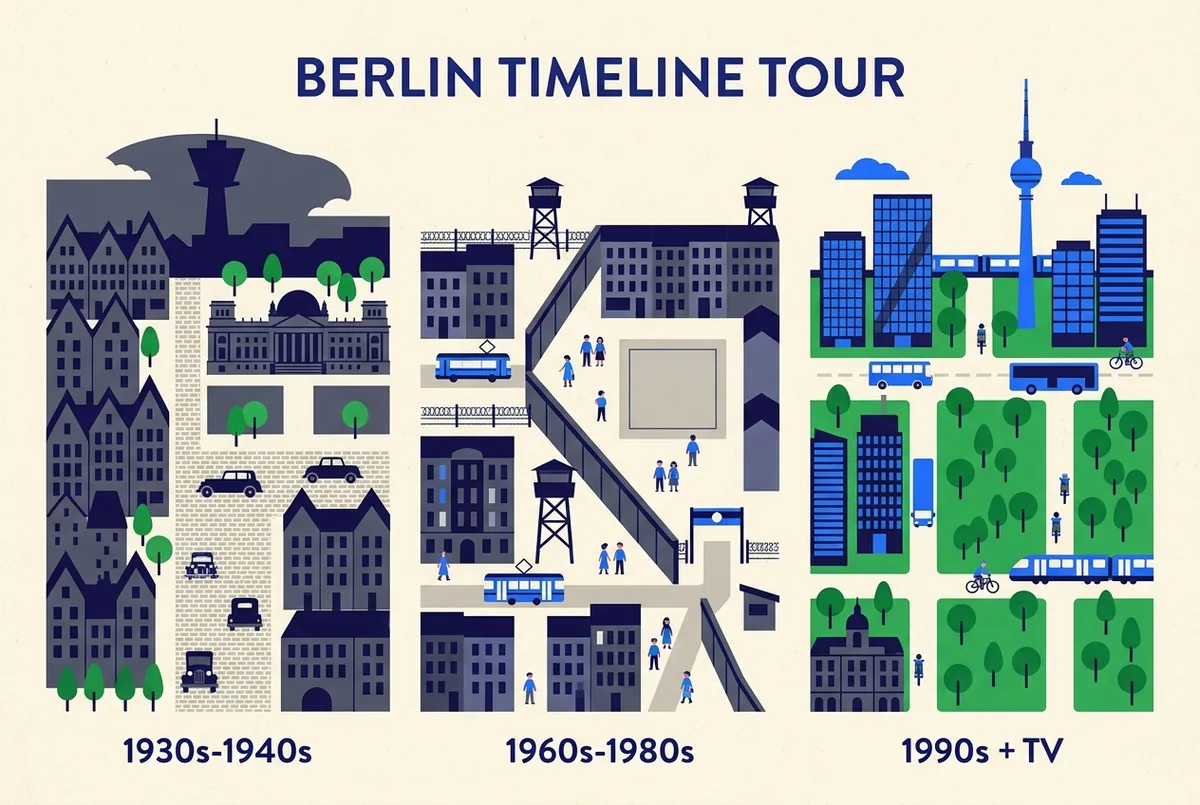
A history tour berlin booking almost always falls into one of three distinct eras: the Nazi period and WWII, the Cold War division of the city, or reunification and everyday life under the DDR. I’d say the single biggest mistake first-time visitors make is treating “Berlin history” as one undifferentiated subject, when the city genuinely offers three separate stories, each with its own sites, its own mood, and its own dedicated tours below.
None of these eras requires a guide to see the surface-level sights, but a guided tour consistently adds context that a plaque or a self-guided walk doesn’t, whether that’s a Third Reich-era building’s hidden backstory or why a particular Cold War checkpoint mattered the way it did. Some of Berlin’s hop-on-hop-off tickets even bundle a guided history walk into the base price rather than selling it as a separate booking, so before you commit to a standalone tour for any of these eras, it’s worth checking which Berlin hop-on-hop-off ticket bundles a guided history walk on the full tours and tickets page.
What Are the Three Historical Eras Berlin Tours Actually Cover?
Nazi Germany and WWII tours cover the Third Reich’s rise, its physical traces in the city, and the war’s end. Cold War tours cover the 1945 to 1989 division, checkpoints, and espionage. DDR and reunification tours cover everyday life in East Germany and how the city stitched itself back together after 1989.
I’d think of these as three separate chapters rather than one long story, even though they obviously connect. Reading them that way genuinely makes it easier to pick which tour actually matches what you’re curious about, rather than booking something vague labeled “Berlin history” and hoping it covers whatever you wanted.
I’d also point out that the eras overlap physically even when they stay separate thematically. Potsdamer Platz, for instance, carries Cold War weight today but sits inside a district the Nazi government once ran, which is exactly why a good guide for either era will sometimes gesture at the other without making it the focus.
Check prices & dates
Ready to visit?
Book your tickets in advance: popular time slots sell out.
How Do You Choose Between Era-Specific Tours If You Only Have Time for One?
Pick based on which era you already find yourself reading about or asking questions about, not based on which one sounds most famous. The Wall and Cold War cluster draws the most search interest on this site by a wide margin, but that doesn’t make it the right fit for every traveler.
My honest advice is to ask yourself which decade you’d actually want a two-hour conversation about. If you can’t answer that quickly, the Wall tour is the safest general starting point, since it touches pieces of both the Nazi and Cold War stories along the way.
How Much Do Berlin History Tours Typically Cost?
Pricing varies by era and format. A single-era walking tour generally sits in a mid-range bracket, a specialist Wall bike tour often costs a bit more given the equipment involved, and a full-day concentration camp trip tends to run highest once transport out of the city is included. Treat any specific figure as may-vary and check the live listing.
My honest read is that price shouldn’t drive the decision between these eras anyway. Each one solves a genuinely different curiosity, so I’d pick based on which story actually interests you rather than which cluster happens to be cheapest that particular week.
What Do WWII and Third Reich Tours Cover?
My full WWII and Third Reich tours guide covers the Nazi era’s physical footprint across the city: government sites, resistance memorials, and the war’s final collapse, handled factually and without sensationalism.
I’d book this one specifically if the 1933 to 1945 period is what drew you to Berlin in the first place, rather than general city history. It’s the heaviest subject matter on this page, and I think tours in this cluster handle that weight appropriately rather than treating it as spectacle.
What Do Berlin Wall Tours Cover?
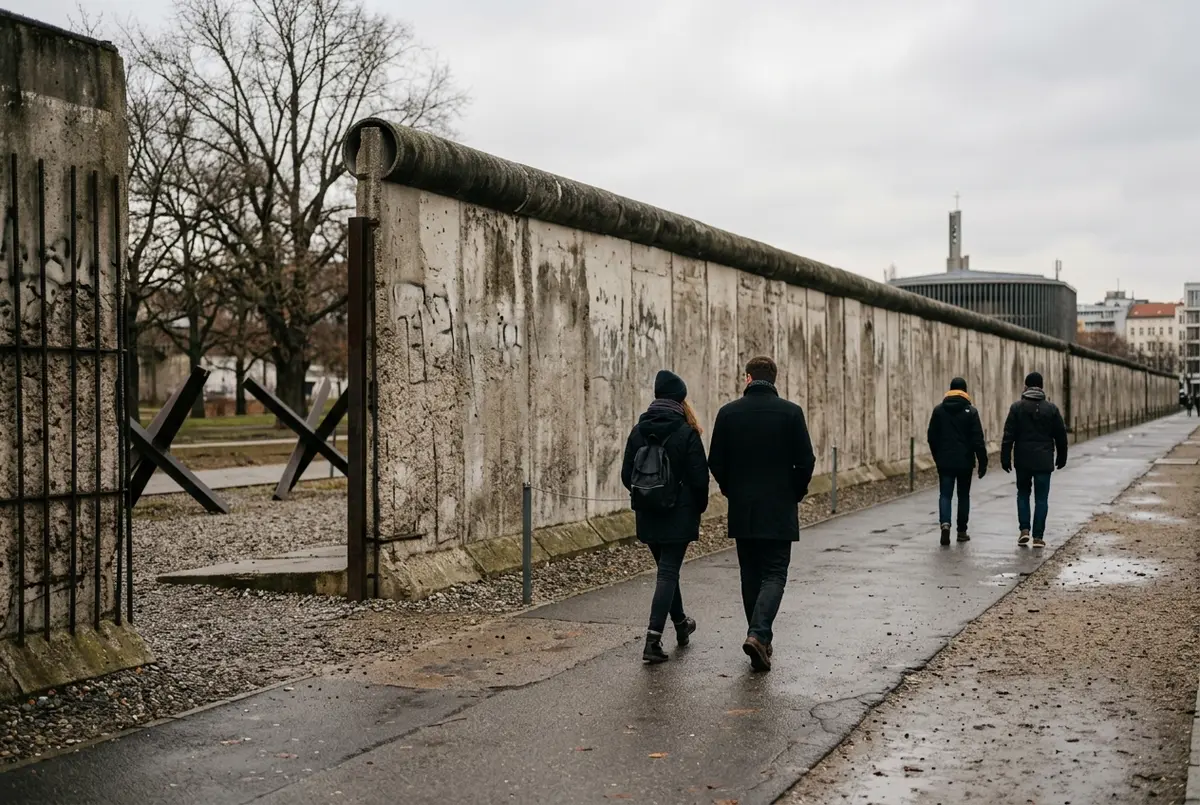
My complete Berlin Wall tours guide covers the memorial sites, walking routes, and bike-tour options built around the East Side Gallery, Checkpoint Charlie, and the Bernauer Strasse memorial.
This is genuinely the single highest-demand history topic on this site, and for good reason. City sightseeing berlin itineraries built around the Wall hit landmarks that are visually striking and emotionally direct in a way a government building sometimes isn’t, which is probably why it’s the most-booked history theme here.
What Do Cold War Tours Cover Beyond the Wall Itself?
My Cold War tours guide covers the broader 1945 to 1989 division: espionage sites, checkpoints beyond just the Wall itself, and the divided city’s daily reality for people living through it.
I’d recommend this one specifically to anyone who found the Wall interesting but wants the fuller political and human context behind why it existed at all. The Wall tour shows you the physical object; this cluster explains the decades-long standoff around it.
What Is the Reichstag Building Tour About?
My Reichstag tours guide covers the government building itself and its glass dome, a single named attraction with real standalone demand, distinct from the broader war-history topics above it.
I’d book this one as a standalone addition to whichever era-specific tour you pick, since it’s a specific building visit with its own registration process rather than a themed walking route through multiple sites.
What Are Concentration Camp Tours From Berlin?
My concentration camp tours guide covers day-trip-style visits to Sachsenhausen and similar memorial sites outside the city center, written with the factual restraint this subject demands.
I would treat this as its own deliberate decision rather than an add-on to a city-center history tour. It requires leaving Berlin for most of a day, and I think it deserves that dedicated time rather than being squeezed in alongside other sightseeing.
What Does the DDR Museum and East Germany Angle Cover?
My DDR Museum and East Germany tours guide covers everyday life under the East German state: consumer goods, Trabant cars, and ordinary apartment living, a genuinely different angle from the espionage focus of the Cold War cluster above.
I’d recommend this one to travelers who find the human, domestic side of history more interesting than politics and checkpoints. It’s a lighter, more personal entry point into the same decades covered elsewhere on this page.
Should You Book a Guided Tour or Visit These Sites on Your Own?
A guided tour adds context a plaque can’t, timing, connections between sites, and answers to questions you didn’t know to ask. Self-guided visits cost less and let you move at your own pace, which matters more at an emotionally heavy site than at a typical landmark.
My honest take is that a guide earns their price most clearly at sites where the physical remains alone don’t tell the full story, Cold War checkpoints especially, since so little of the original infrastructure survives to explain itself.
I’d also say a hybrid approach works well if budget is tight: book one guided tour for whichever era interests you most, then walk the rest self-guided using what you learned to fill in the gaps. You don’t need a guide at every single stop to get real value out of the day.
How Much Time Should You Budget for History-Themed Tours?
Most single-era walking tours run two to three hours. A concentration camp day trip takes most of a day once you count travel time. A Reichstag visit alone, including security and registration, typically runs ninety minutes to two hours.
I’d budget a full half-day per era if you’re genuinely trying to go deep rather than skim. Trying to cover WWII, the Wall, and the DDR all in one rushed day does a disservice to all three.
Are These Tours Appropriate for Children?
It depends heavily on the specific era and site. Wall tours and the Reichstag generally work fine for school-age kids, while concentration camp visits and some WWII-focused content are genuinely heavy subject matter better suited to older teens and adults.
I would check the age guidance on any specific tour listing before booking with younger children, since “history tour” covers a real range from a straightforward Wall walk to content that requires more emotional maturity to process well.
Do You Need to Book These Tours in Advance?
For most of them, yes, especially a concentration camp day trip or a small-group Wall bike tour, since transport and group size are genuinely limited and seats fill up during peak season. A standalone city-center walking tour sometimes has same-day availability, but I wouldn’t count on it in summer.
I’d book anything involving transport out of the city at least a few days ahead, and ideally a week if your dates fall in July or August. A sold-out slot for a day trip you specifically wanted is a disappointment that’s easy to avoid with a little planning.
How Heavy Is This Subject Matter, Honestly?
Varies a lot by era, and I think it’s worth saying plainly. Wall and Cold War tours carry real weight but balance it with intact, walkable sites. WWII and concentration camp content is heavier still, and reputable operators handle it with the restraint it deserves rather than sensationalizing it for effect.
My honest advice is to pace yourself across a trip rather than booking several of these back to back. Spacing a heavier tour against a lighter day, a boat ride or a bike tour, genuinely helps you absorb what you just saw instead of rushing straight into the next heavy topic.
Do History Tours Pair Well With Day Trips Outside Berlin?
Yes, particularly for the concentration camp cluster, which already requires leaving the city. My day trips from Berlin guide covers Potsdam, Dresden, and Prague alongside the logistics of a day away from the center.
I’d plan any day trip with a history theme deliberately rather than as an afterthought, since travel time outside the city eats into the day more than a tour inside central Berlin does.
How Does This Fit Into a Broader Berlin Itinerary?
History tours are usually one layer of a longer visit, not the whole trip. My complete things-to-do-in-berlin guide covers the full range of sights beyond these themed eras, including the landmarks a loop bus passes on a standard first day.
I’d slot one history-themed tour into most two or three day itineraries, placed after a general orientation day so the sites already feel familiar when the guide adds deeper context to them.
How Do These Eras Show Up Beyond Formal Tours, in Everyday Berlin?
All three eras leave visible traces well beyond the dedicated tours and memorials. Stolpersteine, small brass memorial stones set into sidewalks outside former homes, mark where victims of the Nazi regime once lived, and you’ll pass them on ordinary streets with no tour booked at all. Cold War-era architecture and DDR-era apartment blocks are similarly woven into neighborhoods you’ll walk through regardless of which tour you book.
I’d genuinely recommend looking down occasionally as you walk between sights, not just at the landmarks a guide points out. Some of the most affecting reminders of this city’s history show up in small, easy-to-miss details rather than the headline memorials everyone already knows to visit.
How Does Weather Affect a Day Spent on History Tours?
Most of these tours run outdoors at least partly, walking between sites rather than staying inside a single building, so rain or cold rarely cancels anything but does change the experience. Indoor stops like the Topography of Terror or the Reichstag’s interior offer a natural break from the weather mid-route.
I’d pack real layers rather than hoping for good weather, especially for the Wall and Cold War routes, which cover more open ground between stops than a single-building visit like the Reichstag does. A miserable, underdressed hour outside is an easy problem to avoid with a bit of planning.
Which Era Should You Start With If You Only Have One Day?
I’d start with the Wall, honestly. It’s the most visually immediate of the three eras, it connects naturally to both the WWII and Cold War stories, and it leaves you with a clear mental map of the city’s more recent past that makes everything else click into place faster.
If a single day is genuinely all you have, I would skip trying to add a concentration camp day trip on top of it. That subject deserves its own dedicated day, not a rushed half-afternoon squeezed between other plans.
My Honest Recommendation
Pick one era to go deep on this trip rather than trying to sample all three. Start with the Wall if you’re unsure, add the Reichstag as a standalone visit if government architecture interests you, and save the concentration camp day trip for a return visit if your schedule is already tight.
I would genuinely resist the urge to overbook history-themed tours into one trip. These are heavier experiences than a boat ride or a bike tour, and spacing them out, even by a single lighter day in between, makes each one land with the weight it deserves instead of blurring together.
If you’re traveling with a mixed group, some history-curious and some not, I’d split the day rather than force everyone onto the same tour. Let the curious half book a dedicated walk while the rest spend that time on the bus or at Museum Island, then regroup for dinner. Nobody drags through a tour they didn’t actually want to be on, and nobody feels rushed through one they did.
For broader context on the city’s layered twentieth-century history, Wikipedia’s overview of Berlin is a solid, neutral starting point before you dive into any single era. And once you’ve picked a theme, the complete breakdown of every Berlin hop-on-hop-off ticket on the homepage is worth a look, since several options double as a flexible way to reach these sites between guided tours.
Frequently Asked Questions
What are the three main eras covered by Berlin history tours?
Nazi Germany and WWII, the Cold War division of the city, and reunification and everyday life under the DDR.
Which Berlin history tour is the most popular?
Berlin Wall tours draw the most interest, likely because the sites are visually striking and the story is easy to follow in a single walk.
Are Berlin history tours suitable for children?
It depends on the era. Wall tours generally work for school-age kids, while concentration camp visits are better suited to older teens and adults.
Do I need to book a guided tour, or can I visit these sites myself?
Either works. A guide adds context and connections between sites, while a self-guided visit costs less and lets you set your own pace.
How much time should I set aside for a history-themed day?
Budget a half-day per era if you want real depth. Rushing WWII, the Wall, and the DDR into one day shortchanges all three.