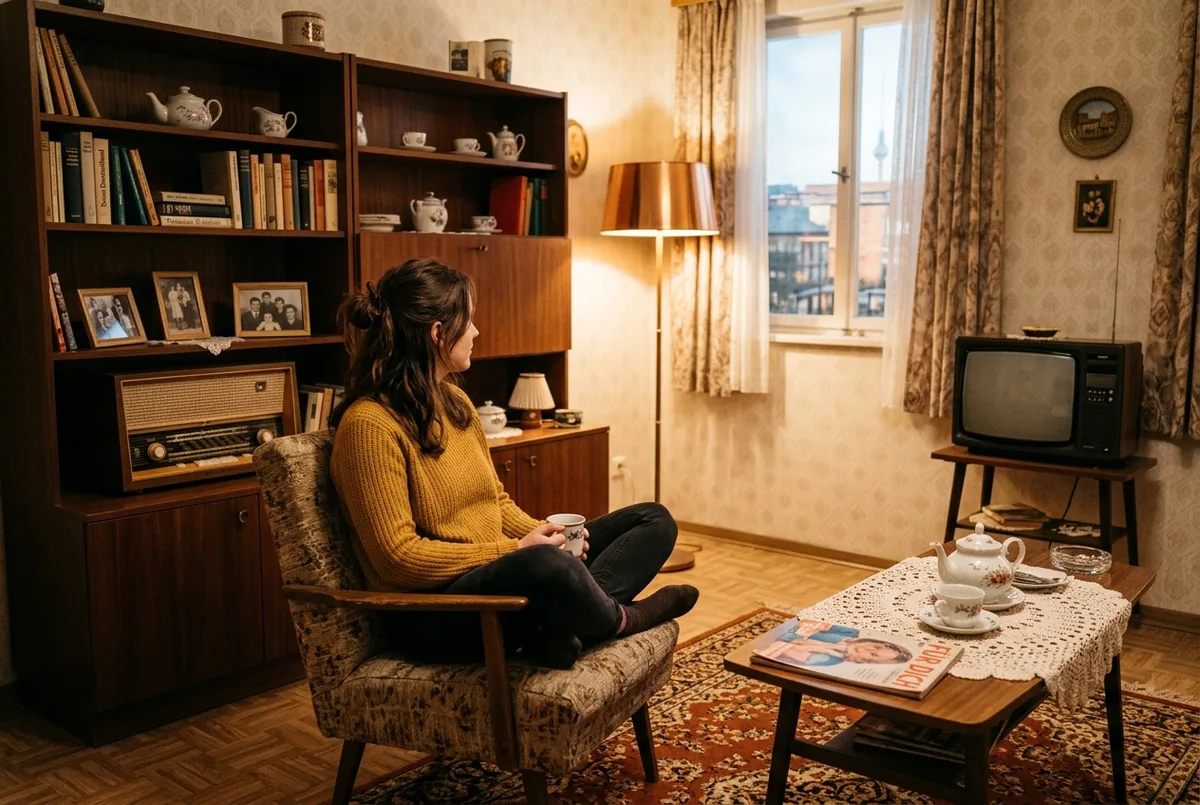
A ddr museum berlin tour is built around a genuinely different angle than most Berlin history content: everyday domestic life under East Germany, told through reconstructed apartments, a real Trabant car you can sit in, and shelves of consumer goods most Western visitors have never seen in person. I’d say this is the lightest entry point into Cold War-era history on this entire site, in tone if not in subject matter.
If you haven’t yet decided which era of Berlin’s past you want to go deep on, my Berlin history tours overview lays out how this angle fits alongside the heavier WWII and Cold War clusters.
What Makes the DDR Museum Different from a Standard History Exhibit?
Most of the exhibits are hands-on rather than behind glass: you can sit in the Trabant, open kitchen cupboards in the reconstructed apartment, and handle reproduction household items from the era. It’s built around everyday texture rather than political timelines or military hardware.
I’d say this is exactly what makes it work so well for a mixed group. A teenager bored by a timeline of government decrees will usually still find climbing into a Trabant or flipping through an old East German magazine genuinely interesting.
What Will You Actually See Inside?
Expect a reconstructed East German living room, a kitchen stocked with period packaging and appliances, sections on surveillance and the Stasi’s reach into private life, and displays covering fashion, media, and vacation culture under the state. The Trabant exhibit is usually the single most photographed corner of the museum.
My honest take is that the surveillance section lands harder than most visitors expect going in. Seeing how deeply the Stasi’s reach extended into ordinary apartments gives real weight to a subject that can otherwise feel abstract.
How Long Does a DDR Museum Visit Take?
Most visitors spend ninety minutes to two hours moving through the exhibits at a relaxed pace, since the hands-on format naturally slows people down compared with a read-the-plaques museum. Families with curious kids often run closer to the two-hour mark.
I’d budget on the longer side if you’re visiting with children specifically. The interactive setup tends to hold their attention far longer than a typical museum stop would.
Where Is the DDR Museum Located, and Is It Easy to Reach?
The museum sits directly across from the Berlin Cathedral and Museum Island, in the heart of central Berlin, making it one of the easiest history stops on this site to reach without a dedicated trip. Most hop-on-hop-off routes pass within a short walk of this stretch of the Spree.
I’d pair this with a Museum Island visit on the same day without hesitation, since the two sit close enough that splitting them across separate outings wastes time better spent elsewhere.
Is This a Good Fit for Visitors Who Find Politics Boring?
Yes, genuinely more so than almost any other history option covered on this site. The museum tells its story through objects and lived experience rather than political speeches or military campaigns, which makes it accessible even to visitors who’d normally skip a history museum entirely.
My honest advice is to start here if you’re easing a reluctant travel companion into Berlin’s history rather than opening with a heavier WWII or Cold War site. This angle tends to win people over first.
How Does This Differ from the Cold War Tours Cluster?
My Cold War tours guide focuses on checkpoints, espionage, and the geopolitical standoff between East and West. The DDR Museum angle is domestic and personal: what it actually felt like to live, shop, and raise a family on one side of that divided city.
I’d recommend both if you have the time, in that order. Understanding the political backdrop from the Cold War cluster first makes the DDR Museum’s everyday details land with more context.
Does This Connect to the Berlin Wall Story Too?
Yes, indirectly. The Wall is the physical symbol of the division this museum explores from the inside. My Berlin Wall tours guide covers the physical border itself, while this angle covers the daily life that border enforced.
I’d visit the Wall sites first if you’re doing both, since seeing the physical barrier gives the apartment and consumer-goods exhibits here a sharper sense of what was actually being cut off from the West.
Is a Guided Tour Necessary, or Is Self-Guided Fine?
Self-guided is genuinely fine here, since the exhibits are designed to be hands-on and largely self-explanatory with the included audio guide. A guided add-on mainly adds deeper context on specific objects or a more structured narrative through the rooms.
I would only pay for a guide if you want someone fielding specific questions as you go. Most visitors get real value out of the self-guided pace without feeling like they missed anything.
How Does This Fit Alongside the Reichstag and WWII Sites?
The three sit at different points along the same broader timeline: the Reichstag’s story spans before and after this era, WWII content covers what came before it, and this museum covers the decades of division that followed. My Reichstag tours guide and WWII and Third Reich tours guide cover those adjacent pieces.
I’d slot this museum in as a lighter middle day between a heavier WWII-focused stop and a Wall or Cold War walk, since the tone here is noticeably gentler even while the underlying history stays serious.
Is This Suitable for Visiting with Kids?
Yes, more so than most other history content on this site. The hands-on format, especially the Trabant and the reconstructed apartment, genuinely engages kids in a way a standard exhibit of documents and photographs usually doesn’t.
I’d recommend this specifically as the history stop to bring children to if you’re trying to balance a trip between what adults want to see and what will actually hold a kid’s attention for more than ten minutes.
When’s the Best Time to Visit to Avoid Crowds?
Mornings right after opening tend to be the calmest window, since the hands-on exhibits naturally create bottlenecks once a few tour groups arrive and start queuing for the Trabant or the apartment rooms. Weekday visits generally run quieter than weekends, especially outside the main summer season.
I’d prioritize an early slot over almost any other scheduling factor here. A crowded apartment room with three families waiting to sit in the Trabant changes the pace of the visit more than weather or season ever really does.
How Does This Compare to Other History Museums in Berlin?
Most of Berlin’s larger history museums lean toward documents, photographs, and artifacts kept behind glass, which rewards patience and reading but can feel passive for younger or more restless visitors. This museum’s hands-on format is the clear exception, built specifically around objects you’re meant to touch and spaces you’re meant to sit in.
My honest take is that this makes it the stronger pick if you’re choosing just one history museum for a day with a mixed group. The interactive format consistently wins over visitors who’d otherwise find a glass-case museum tedious.
Is There a Gift Shop Worth Browsing Afterward?
Yes, and it leans into the same everyday-object theme as the exhibits rather than generic souvenirs, with reproduction packaging, books on East German design, and small Trabant-themed items among the more popular picks. It’s a natural extension of the museum’s hands-on approach rather than an afterthought bolted on at the exit.
I’d budget a few extra minutes here if design or packaging history interests you at all. It’s a small stop, but I think it rounds out the visit nicely without adding much to your overall time at the museum.
My Honest Recommendation
Visit the DDR Museum as either your lightest-touch entry point into this era or as a palate change between heavier history stops elsewhere on your trip. Pair it with Museum Island on the same day given how close they sit, and budget closer to two hours if kids are along for the visit.
I would genuinely put this near the top of your list even if Cold War politics doesn’t usually interest you. The everyday, hands-on framing here wins over more skeptical visitors than almost anything else in this part of the city.
For official background on the museum and its collection, Wikipedia’s overview of the DDR Museum is a solid, neutral starting point. And once this stop is on your list, compare every Berlin hop-on-hop-off ticket side by side on the homepage for the easiest way to reach it and the rest of central Berlin.
Frequently Asked Questions
What does the DDR Museum actually cover?
Everyday life in East Germany: reconstructed apartments, consumer goods, a real Trabant car, and the Stasi’s surveillance of private life.
How is the DDR Museum different from Cold War history tours?
It focuses on domestic, personal experience rather than checkpoints, espionage, and the geopolitical standoff the Cold War cluster covers.
How long should I budget for a visit?
Ninety minutes to two hours, longer if you’re visiting with curious kids who enjoy the hands-on exhibits.
Is the DDR Museum good for children?
Yes, its interactive format tends to hold kids’ attention better than a typical history museum.
Do I need a guided tour, or is self-guided enough?
Self-guided is genuinely fine, since the included audio guide covers the context most visitors need.