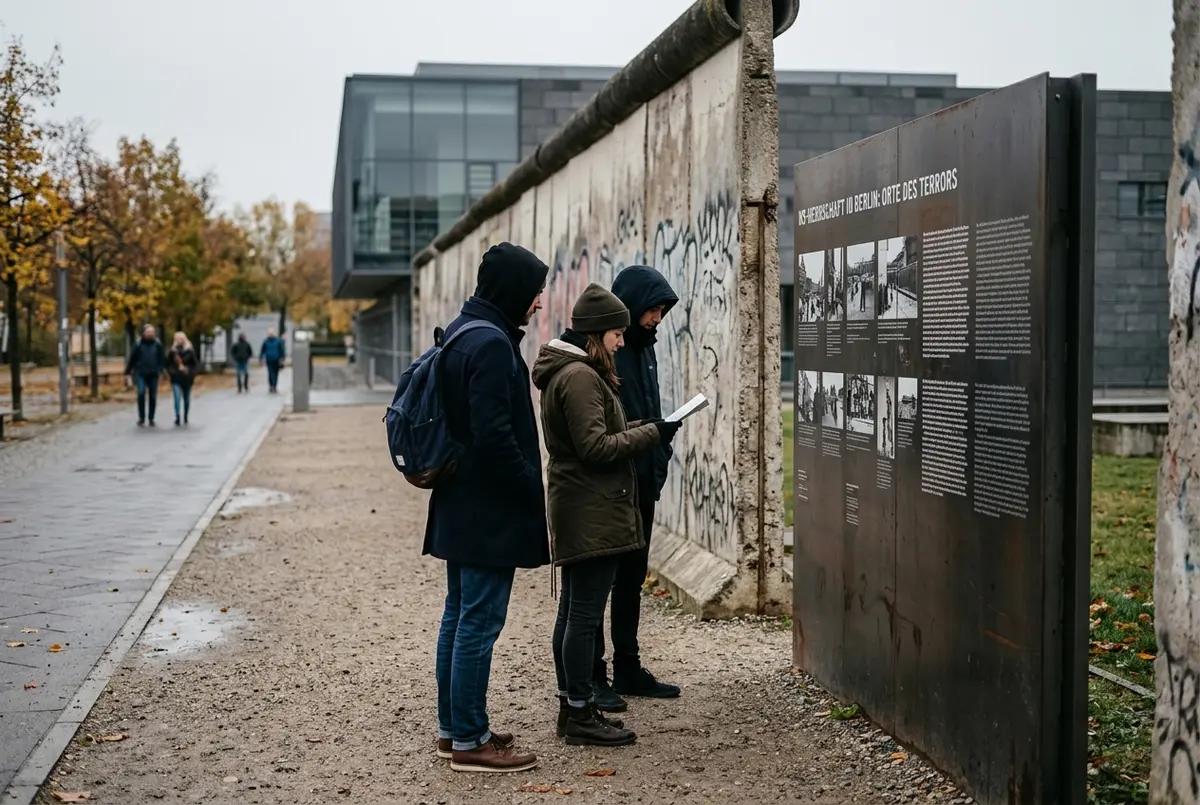
A ww2 tour berlin booking covers the Third Reich era specifically: the regime’s rise, its physical footprint across the government district, resistance history, and the war’s final collapse in 1945. I’d say this is the most emotionally weighty of Berlin’s three history eras, and a responsible guide treats it that way, with factual framing rather than shock value.
Before booking, my Berlin history tours overview is worth reading if you haven’t already decided whether this era, rather than the Cold War or reunification, is the one that genuinely interests you most.
What Does a WW2 Tour in Berlin Actually Cover?
Most tours in this category walk through the Nazi government’s former administrative district, cover the regime’s rise to power, resistance efforts against it, and the war’s final collapse in the city, including the bunker where it ended. Sites are chosen for their documented historical role, not for shock value.
I’d say the strongest tours in this category spend as much time on resistance and victims as they do on the regime’s machinery itself. That balance matters, and it’s worth asking a guide or reading reviews for how a specific tour handles it before booking.
What Is the Topography of Terror, and Why Does Every Tour Stop There?
A documentation center built on the former site of the Gestapo and SS headquarters, now a free outdoor and indoor exhibition explaining how the regime’s security apparatus actually operated. Nearly every world war 2 tours berlin itinerary includes a stop here because so little of the original building survives above ground.
I’d treat this as the single most informative stop on any Third Reich tour, specifically because the exhibition itself does the explaining with original documents and photographs rather than relying on a guide’s narration alone.
What Other Third Reich-Era Sites Do These Tours Visit?
Routes commonly include the government district around the former Reich Chancellery site, the Reichstag building’s exterior, and sites connected to resistance movements against the regime. Some extend to the 1936 Olympic Stadium or Wannsee, depending on the operator and available time.
My honest take is that the government district stops hit hardest specifically because so little visibly remains. Standing on an ordinary street that once held the regime’s command center says more than a dramatic building ever could.
Why Do Some Tours Call Themselves “Hitler Tours”?
Hitler tour berlin is simply the colloquial search term many travelers type when looking for Third Reich history content, not a sign of a tour’s tone or approach. The actual tours behind that search term are generally the same factual, documentary-style walks described throughout this page.
I would judge any specific listing by its description and reviews rather than its title alone, since the search phrase people use and the tour’s actual content don’t always match exactly.
How Do Guides Handle This Subject Matter Responsibly?
Reputable operators lean on documented history, primary sources, and survivor or resistance accounts rather than speculation or dramatization. The goal is understanding how this happened, not entertainment.
I’d specifically check recent reviews for any mention of tone before booking, since this is one subject where a mismatched guide, either too clinical or too theatrical, can genuinely undermine the experience either way.
Is a WW2 Walking Tour Different From a Bus-Based Overview?
Yes, meaningfully. A ww2 walking tour berlin route lets a guide stop at length at a specific site and actually explain its significance, while a bus route only passes these locations briefly as part of a broader sightseeing loop.
I’d pick the dedicated walking tour if this era is your main interest in visiting Berlin at all. A bus pass is a fine way to see these sites exist, but it won’t give you the context a focused walk does.
How Long Does a Third Reich Walking Tour Take?
Most dedicated walks run between ninety minutes and two and a half hours, depending on how many sites the route covers and how much time the guide spends at the Topography of Terror specifically.
I’d budget the longer end of that range rather than the shorter one. This subject tends to generate genuine questions partway through, and a rushed guide cutting those off defeats much of the point of booking a guided version at all.
Is This Tour Appropriate for Teenagers?
Generally yes for older teenagers with some prior context, though I’d treat it as genuinely heavier material than the Berlin Wall tour cluster. The content deals directly with the regime’s crimes and the war’s human cost, which some younger teens may not be ready to process in depth.
I would talk through what the tour covers with a teenager beforehand rather than booking it as a surprise activity, since going in with some context noticeably changes how a visit like this lands.
Does a Hop-On Hop-Off Ticket Include Any WW2 Content?
Some do, as an add-on rather than the base route. The Big Bus network’s ticket options include an optional 1.5-hour live walking tour covering the Third Reich and Cold War together, on top of the standard sightseeing loop.
I’d check this specifically if budget matters, since combining it with a bus ticket you already need can work out cheaper than booking a fully separate specialist tour. My Big Bus ticket breakdown covers exactly what that add-on includes.
How Does This Connect to the Berlin Wall and Cold War Tours?
This era comes first chronologically. My Berlin Wall tours guide and my Cold War tours guide pick up the story from 1945 onward, once the war covered here had already ended.
I’d genuinely recommend doing this tour before either of those two if you’re covering more than one era on your trip. Understanding how the war ended makes the division that followed make far more sense.
Should You Visit a Concentration Camp Memorial on the Same Trip?
It’s worth considering, but I wouldn’t combine it with this city-center tour on the same day. My concentration camp tours guide covers Sachsenhausen and similar sites outside Berlin, which require a full day trip of their own.
I’d space these two experiences across different days of your trip rather than stacking them. Both deserve full attention, and neither benefits from being rushed to fit a second heavy site into the same afternoon.
What Does the DDR Museum Angle Add After This?
Once you’ve covered the war itself, my DDR Museum and East Germany tours guide picks up decades later with everyday life under the East German state, a genuinely lighter follow-up after this heavier subject.
I’d actually recommend that order specifically: this tour first, then the DDR angle later in your trip, as a kind of emotional palate cleanser once you’ve sat with the heavier material for a day or two.
What Should You Wear or Bring on a Tour Like This?
Comfortable walking shoes matter here as much as on any other history tour, since routes typically cover several stops across the former government district on foot. Weather-appropriate layers are worth packing too, since nearly all of this runs outdoors between indoor exhibition stops.
I’d bring a notebook or just use your phone to jot down names and dates that come up, honestly. This is a dense subject, and a guide covers a lot of specific detail in a short walk that’s easy to lose track of afterward without writing anything down.
My Honest Recommendation
Book a dedicated walking tour over a bus-only overview if this era is your main interest, and go in with the Topography of Terror as your must-see stop regardless of which specific operator you choose. Give yourself the full ninety minutes to two and a half hours rather than rushing it.
I would also genuinely suggest not stacking this with a concentration camp day trip on the same visit to the city center. Space the two out, even by a single day, so each one gets the attention it deserves rather than blurring together into one long, heavy afternoon.
For factual background on this period, the United States Holocaust Memorial Museum’s overview of Nazi Germany is a well-sourced, neutral reference worth reading before your visit. And for a flexible way to reach the rest of the city afterward, the full Berlin hop-on-hop-off lineup on the homepage is worth comparing.
Frequently Asked Questions
What does a WW2 tour in Berlin typically cover?
The Third Reich’s rise, its government district, resistance history, and the war’s final collapse, usually anchored by a stop at the Topography of Terror.
Is “Hitler tour berlin” a different kind of tour than a WW2 tour?
No, it’s simply a common search phrase. The tours behind it are generally the same factual, documentary-style walks described throughout this page.
How long does a Third Reich walking tour usually take?
Most run ninety minutes to two and a half hours, depending on how many sites the route includes.
Is this tour suitable for teenagers?
Generally yes for older teens with some prior context, though I’d treat it as heavier material than a Berlin Wall tour.
Should I combine this with a concentration camp day trip?
I wouldn’t, at least not on the same day. Both deserve full, separate attention rather than being rushed together.