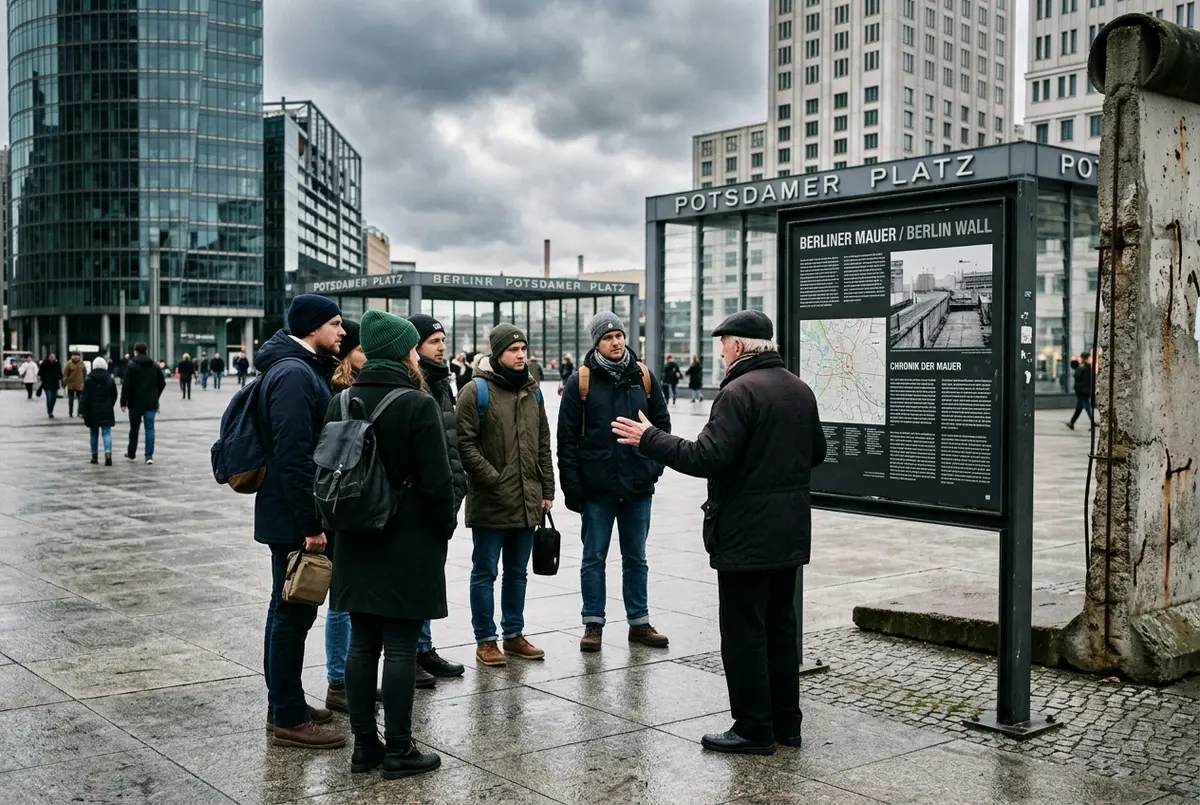
A cold war walking tour berlin booking covers more ground than the Wall alone: espionage sites, checkpoints beyond Checkpoint Charlie, and what daily life actually looked like for people living through a city split in half from 1945 to 1989. I’d say this is the right next step once you already understand the Wall itself and want the political and human story behind it.
If you haven’t already covered the Wall’s physical sites, my Berlin Wall tours guide is worth reading first, since this tour builds directly on that context rather than repeating it.
What Does a Cold War Walking Tour in Berlin Actually Cover?
Routes typically connect several former flashpoints across the city, Potsdamer Platz, Checkpoint Charlie, and sites tied to espionage and surveillance, explaining how the standoff between East and West actually played out day to day rather than just where the border physically ran.
I’d say the real value here is connecting dots a Wall-only tour doesn’t have time for. Berlin cold war sites scattered across the city tell a bigger story than any single location can on its own.
How Is This Different From a Berlin Wall Tour?
The Wall tour focuses on the physical border itself, the structures that survive and where they stood. A Cold War tour zooms out to the decades-long political standoff the Wall represented, including sites that have nothing to do with the border directly.
I’d book the Wall tour first if you’re doing both, since it gives you the physical landmarks this broader tour then explains the meaning behind. Doing it in the reverse order works too, but I think the physical-first approach lands better.
What Espionage Sites Do These Tours Visit?
Several routes include locations tied to intelligence operations during the divided-city era, former listening posts, diplomatic exchange points, and buildings connected to agencies operating on both sides of the border. Specific stops vary by operator and route.
My honest take is that this is the most underrated angle of Berlin’s Cold War story. Most visitors know about the Wall; far fewer know how much of the actual conflict here played out through intelligence work rather than open confrontation.
What Checkpoints Beyond the Wall Itself Matter Here?
Checkpoint Charlie gets the most attention, but Potsdamer Platz sat directly on the former death strip and functioned as genuine no man’s land for decades before reunification turned it into the glass-tower district you see today.
I’d say Potsdamer Platz is the single most surprising stop on most Cold War routes, specifically because almost nothing about its current appearance hints at what the site actually was. A guide’s explanation here does real work that the modern skyline can’t do on its own.
What Was Daily Life Like in the Divided City?
Families and friends were separated overnight in 1961, commutes and visits that once took minutes became impossible, and the city developed two entirely separate infrastructures, currencies, and governments within walking distance of each other.
I’d recommend pairing this tour with the human side of the story specifically, not just the politics and checkpoints. The logistics of division are interesting, but it’s the personal disruption that tends to stick with visitors longest.
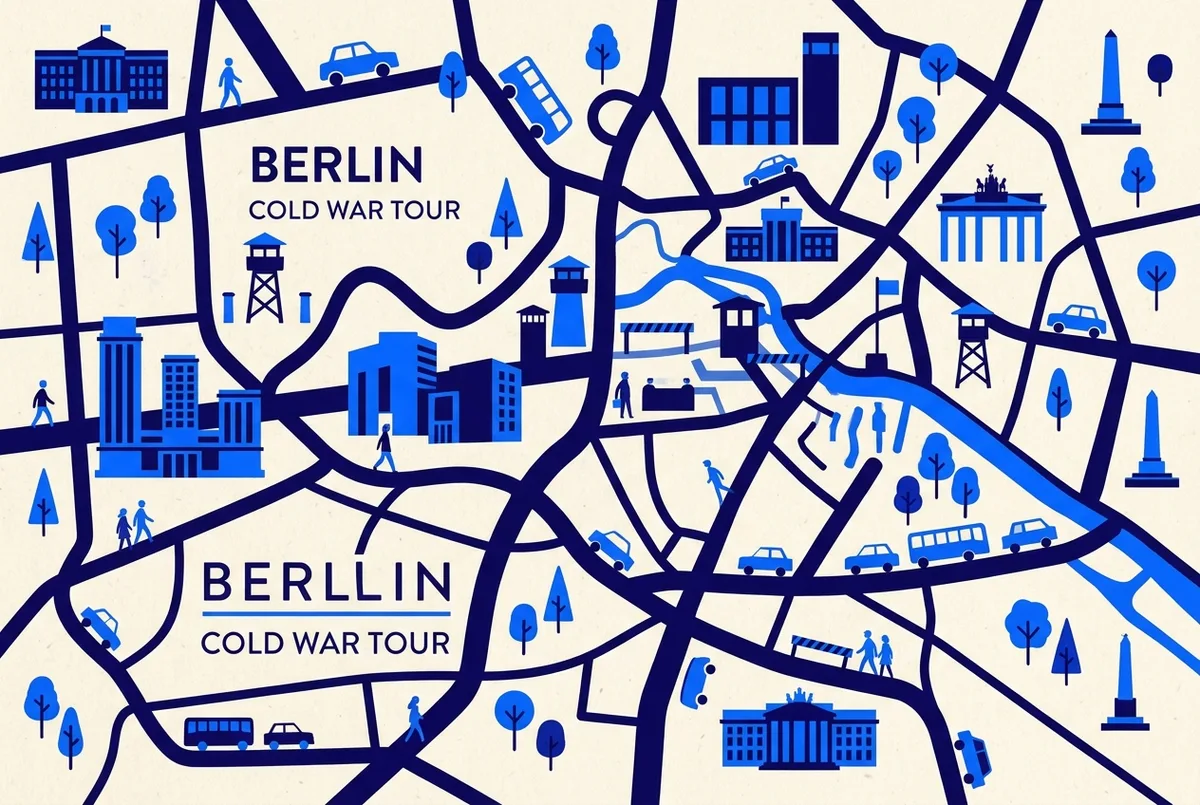
How Does Potsdamer Platz Fit Into the Cold War Story?
It sat directly on the death strip between the two wall lines for nearly three decades, making it one of the most visually dramatic examples of how thoroughly the division reshaped the city’s geography. Today it’s a commercial and entertainment district with almost no visible trace of that history without a guide pointing it out.
I’d treat this stop as proof of how completely Berlin rebuilt itself after 1989. Standing in a modern shopping plaza that was once an empty, heavily guarded strip of no man’s land is a genuinely disorienting feeling worth experiencing in person.
Is a Cold War Tour Better as a Walk or With a Guide?
A guide earns their price here more than almost anywhere else on this site, since so little physical evidence of the espionage and political story remains visible without someone explaining what you’re actually looking at.
I would specifically avoid trying to do this one self-guided unless you’ve already read deeply on the subject beforehand. The Wall tour works reasonably well self-guided; this one genuinely doesn’t.
How Long Does a Cold War Walking Tour Take?
Most dedicated routes run two to three hours, covering several spread-out sites that require real walking time between stops, longer than a single-location visit like the Reichstag.
I’d budget the full three hours rather than assuming the shorter end applies, since the sites here are more spread out across the city than the Wall tour’s three core stops.
Does This Overlap With the Underground Bunker Tours?
Somewhat, yes. My underground and bunker tours guide covers Cold War-era subterranean structures specifically, which pairs well with the street-level sites covered here.
I’d treat the two as complementary rather than redundant. This tour explains the political story at street level, while the bunker tour shows you the literal underground infrastructure built because of it.
Is This Tour Appropriate for Kids?
It works reasonably well for school-age children, since the content focuses more on political history and infrastructure than the harder subject matter in the WWII cluster. Older kids who already understand the basic idea of a divided city tend to follow along fine.
I would still expect younger kids to find this one more abstract than the Wall tour, since fewer of the sites here have an obvious physical structure to look at compared to the preserved Wall segments at Bernauer Strasse.
How Does This Connect to the Wall and WWII Tours?
This era sits between the other two chronologically. My WWII and Third Reich tours guide covers what came before, and the Wall tours guide covers the most visible physical remnant of what’s described here.
I’d genuinely recommend all three in that order if you’re spending real time on Berlin’s history: the war first, then this broader Cold War context, then the Wall’s physical sites to ground the whole story in something you can actually stand in front of.
What Should You Know Before Booking?
Confirm whether the route is entirely on foot or includes any transit between spread-out stops, since Cold War sites are more scattered across the city than the Wall’s three concentrated locations. Comfortable shoes matter more here than almost anywhere else on this list.
I’d also ask whether the guide covers espionage history specifically, since not every general Cold War tour goes deep on that angle. If it’s the part that interests you most, confirm it’s actually on the itinerary before you book.
Does Season or Weather Change How This Tour Feels?
Not dramatically, since most of the route involves walking between outdoor sites regardless of month, but a grey, overcast day arguably suits the subject matter better than bright summer sunshine does. Winter visits tend to feel quieter at these sites too, with fewer other visitors around.
I would honestly not avoid booking this one in colder months just for comfort’s sake. A quiet, cold afternoon at Potsdamer Platz or Bernauer Strasse, with fewer crowds breaking the mood, can leave a stronger impression than the same stop on a busy, sunny weekend.
My Honest Recommendation
Book this one after you’ve already seen the Wall’s physical sites, not before. The story lands harder once you’ve stood in front of an actual preserved border section and can connect it to the broader political standoff this tour explains.
I would prioritize a guided version over a self-guided attempt here specifically, more than for any other history tour on this site. The Cold War’s most interesting sites, Potsdamer Platz especially, genuinely don’t explain themselves without someone telling you what used to stand there.
For background on the broader standoff these sites represent, Wikipedia’s overview of Checkpoint Charlie is a solid, focused starting point. And once you’ve got your history tours sorted, Berlin’s hop-on-hop-off bus options side by side on the homepage is worth a look for getting between the rest of the city’s sights.
Frequently Asked Questions
What makes a Cold War tour different from a Berlin Wall tour?
A Wall tour focuses on the physical border structures. A Cold War tour covers the broader political standoff, including espionage sites and checkpoints beyond the Wall itself.
Does a Cold War tour cover espionage history?
Many do, including sites tied to intelligence operations, though specific coverage varies by operator, so I’d confirm it’s on the itinerary before booking.
How long does a Cold War walking tour usually take?
Most run two to three hours, since the sites are more spread out across the city than the Wall’s three core locations.
Is a Cold War tour suitable for kids?
Reasonably, especially for school-age children who already understand the basic idea of a divided city, though it’s more abstract than the Wall tour.
Should I book the Wall tour or the Cold War tour first?
I’d do the Wall tour first for the physical sites, then this one for the broader political context behind them.